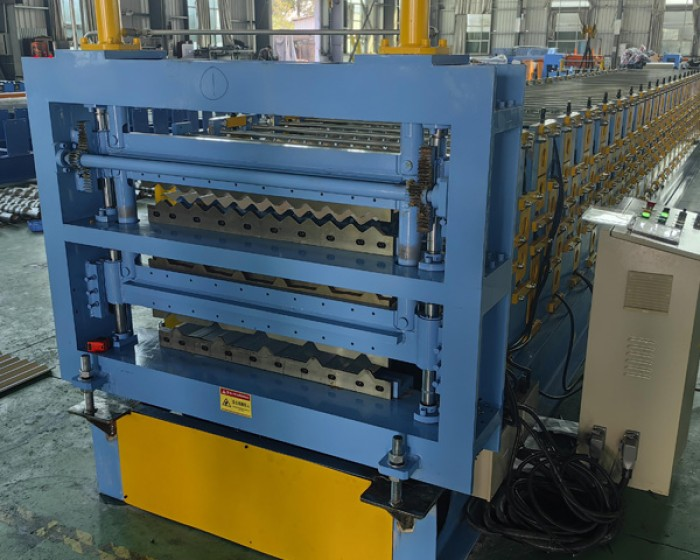
Roll forming machinery continues to evolve as manufacturers seek faster production, greater precision, and improved operational efficiency. Recent developments in roll forming technology have introduced advanced automation, intelligent control systems, and more flexible production capabilities that help businesses meet the growing demands of the construction and industrial sectors. By investing in modern equipment, manufacturers can improve product quality, reduce operating costs, and strengthen their competitive position. Equipment such as the metal framing machine and metal stud machine represents the latest advancements in steel profile manufacturing.
The Evolution of Roll Forming Machinery
Roll forming has developed from basic mechanical production systems into highly automated manufacturing solutions. Today’s machines integrate digital controls, precision rollers, automated cutting systems, and intelligent monitoring technologies to deliver consistent and reliable production.
These innovations enable manufacturers to improve productivity while maintaining strict quality standards throughout the production process.
Latest Developments in Roll Forming Machinery
Intelligent Automation
Modern roll forming machines feature advanced automation systems that control material feeding, profile forming, cutting, and production monitoring. Automated operation improves efficiency while reducing manual intervention.
Improved Precision Engineering
New machine designs provide greater forming accuracy through precision rollers and enhanced mechanical stability. Accurate production ensures consistent steel profiles with minimal dimensional variation.
Faster Production Speeds
Modern equipment is designed to operate at higher production speeds without compromising product quality. Increased output helps manufacturers meet tight delivery schedules and growing customer demand.
Flexible Manufacturing Systems
Advanced roll forming lines can quickly switch between different product profiles with minimal setup time. This flexibility allows manufacturers to respond efficiently to changing market requirements.
Enhanced Machine Reliability
High-quality components, durable machine frames, and improved engineering reduce maintenance requirements and support long-term continuous production.
Applications of Modern Roll Forming Machinery
Modern roll forming machinery is widely used to manufacture steel framing systems, roofing panels, wall panels, structural profiles, ceiling components, industrial building materials, warehouse structures, modular construction products, commercial building systems, and infrastructure materials. Its versatility makes it an essential part of today’s manufacturing industry.
Benefits of Modern Roll Forming Technology
- Higher production efficiency
- Improved manufacturing accuracy
- Consistent product quality
- Reduced material waste
- Lower operating costs
- Greater production flexibility
- Reliable long-term performance
Selecting Future-Ready Roll Forming Equipment
Manufacturers should evaluate automation capabilities, production capacity, machine durability, maintenance requirements, and technical support before investing in new machinery. Future-ready equipment provides dependable performance while supporting business expansion and long-term productivity.
Modern roll forming systems also help businesses remain competitive by enabling efficient production of a wide variety of steel profiles.
Conclusion
The latest developments in roll forming machinery are transforming steel manufacturing by improving efficiency, increasing precision, enhancing flexibility, and reducing production costs. Businesses that invest in advanced roll forming technology are better positioned to improve productivity, satisfy customer demands, and achieve sustainable growth.
Whether investing in a metal framing machine or a metal stud machine, manufacturers can strengthen their production capabilities, improve operational efficiency, and prepare for the future of modern steel manufacturing.